

 English

17AM Thermal Protectors: Specs, Applications & Selection Guide

Thermal protectors are small but critical safety components installed in motors, transformers, compressors, and other electrically driven equipment to prevent damage from overheating. Among the many thermal protector series available in the market, the 17AM is one of the most widely specified bimetal disc thermostat protectors, recognized for its compact form factor, reliable switching action, and broad range of available trip temperatures. Whether you are an equipment designer selecting a protector for a new motor winding, a procurement engineer qualifying a replacement component, or a maintenance technician troubleshooting a tripping fault, understanding the 17AM thermal protector in practical detail will help you make better decisions and avoid the common errors that lead to premature failure or inadequate protection.
What Is a 17AM Thermal Protector and How Does It Work?
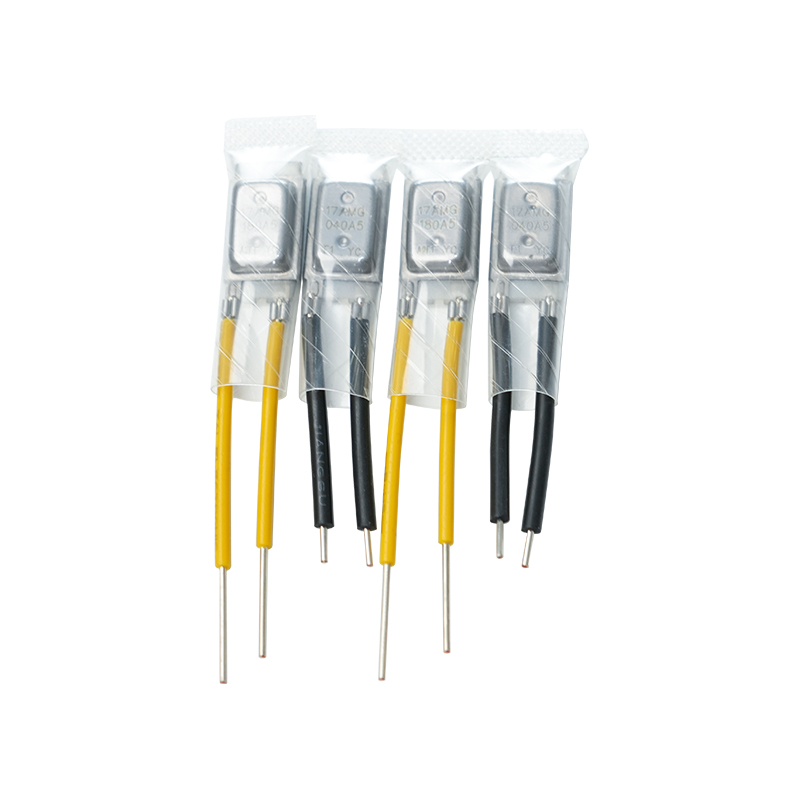
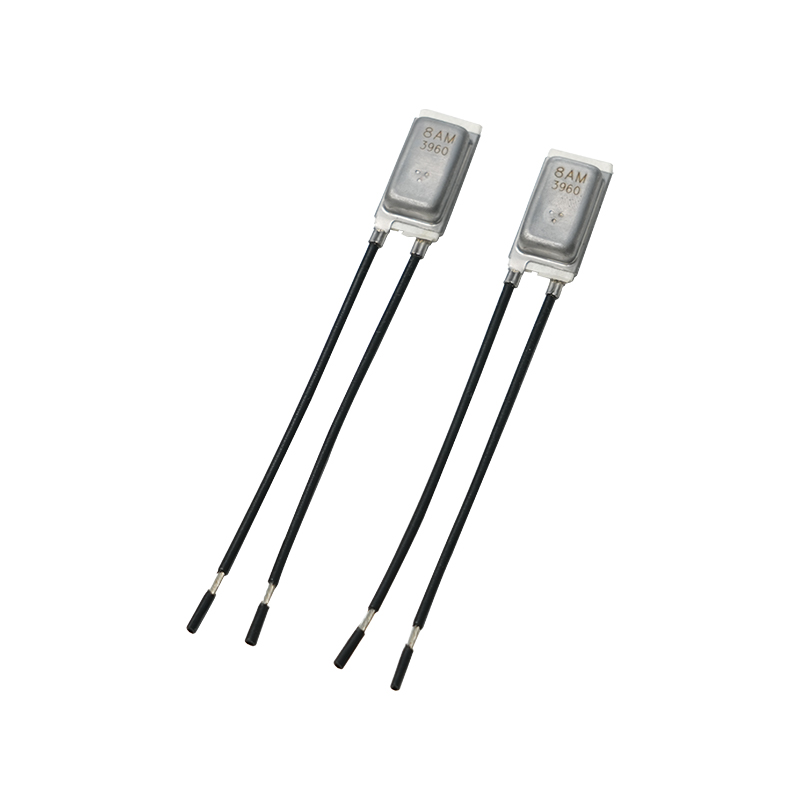
The 17AM thermal protector is a bimetal disc-type automatic reset thermal switch housed in a compact cylindrical or flat-profile metal casing designed for direct embedding in motor windings, transformer coils, or attachment to component surfaces. The "17" in the designation refers to the nominal diameter of the device in millimeters — 17 mm — which is a standard dimension that determines its physical compatibility with motor winding slots and mounting configurations. The "AM" designation identifies the specific product series or model variant within the manufacturer's range, with different variants offering different contact configurations, lead wire types, temperature ratings, and approval certifications.
The operating principle is straightforward but mechanically elegant. Inside the protector housing, a bimetal disc — a laminate of two metals with different coefficients of thermal expansion — is pre-stressed into a domed shape at room temperature. As the surrounding temperature rises toward the rated trip temperature, differential thermal expansion between the two metal layers builds internal stress in the disc until it abruptly snaps from one stable position to the opposite (an "over-center" snap action). This snap action drives a set of electrical contacts to open, interrupting the control circuit or directly breaking the motor supply current, depending on how the protector is wired in the circuit. When the temperature falls sufficiently — typically 20–40°C below the trip temperature, depending on the specific model — the disc snaps back to its original position, closing the contacts and allowing the equipment to restart. This automatic reset behavior distinguishes bimetal disc protectors from manual reset devices and fuse-type thermal cutoffs.

Key Electrical and Thermal Specifications
Selecting the correct 17AM thermal protector requires matching the component's electrical and thermal ratings to the specific demands of the application. The following specifications are the most critical parameters to evaluate:
| Parameter | Typical 17AM Range | Notes |
| Rated voltage | Up to 250V AC | Confirm rating matches supply voltage |
| Rated current | 2A – 15A (model dependent) | Must exceed maximum circuit current |
| Trip temperature (T-open) | 60°C – 180°C | Selected to match winding insulation class |
| Reset temperature (T-close) | 20–40°C below trip temperature | Hysteresis prevents rapid cycling |
| Temperature tolerance | ±5°C to ±10°C | Verify tolerance for tight protection windows |
| Contact configuration | Normally closed (NC) | Opens on overtemperature — most common motor protection configuration |
| Housing dimensions | 17 mm diameter, 4–8 mm height | Flat profile fits between winding layers |
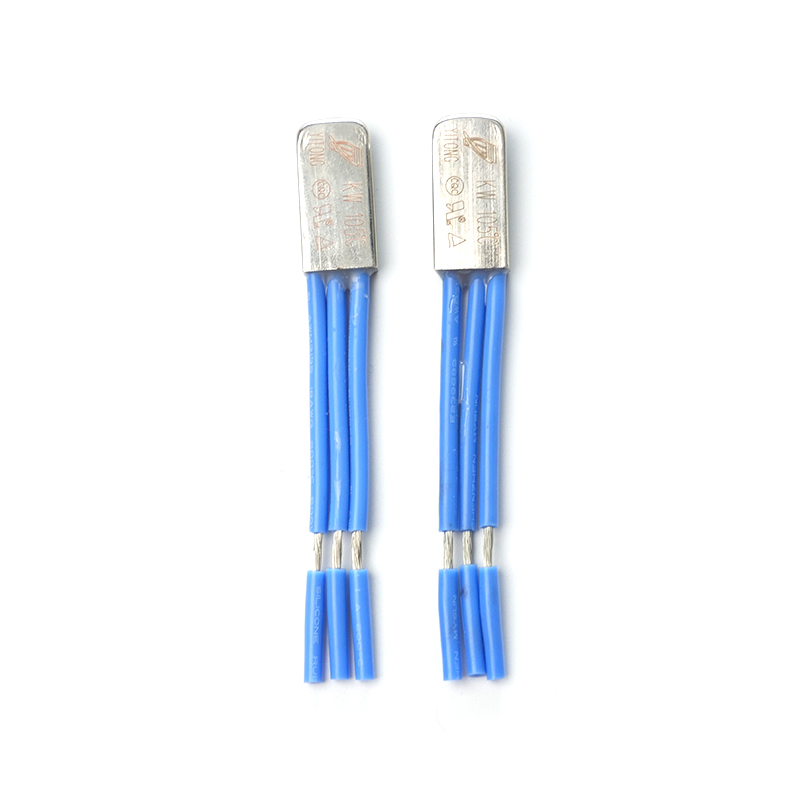
| Lead wire length and type | 100–300 mm, PVC or PTFE insulated | PTFE required for high-temperature winding embedment |
The trip temperature is the most application-specific parameter and requires careful selection. It must be set high enough that normal operating temperature variations do not cause nuisance tripping, yet low enough to interrupt the circuit before winding insulation or other components are damaged by sustained overtemperature. The trip temperature should typically be set 10–20°C below the maximum allowable continuous temperature of the insulation class used in the motor or transformer winding.
Insulation Class and Trip Temperature Selection
Motor and transformer windings are manufactured using insulating materials classified under IEC 60085 into thermal classes based on their maximum continuous operating temperature. Matching the 17AM protector trip temperature to the appropriate insulation class is fundamental to correct application. The table below summarizes the standard insulation classes and the corresponding 17AM trip temperature ranges typically specified:
| Insulation Class | Max. Continuous Temp. | Typical 17AM Trip Temp. |
| Class A | 105°C | 90°C – 95°C |
| Class B | 130°C | 110°C – 120°C |
| Class F | 155°C | 130°C – 140°C |
| Class H | 180°C | 155°C – 165°C |
Note that the trip temperature of the protector is the temperature at the protector's physical location — not the theoretical hotspot temperature of the winding. In embedded applications where the protector sits between winding layers, there can be a meaningful temperature differential between the protector location and the actual hottest point in the winding. Equipment designers should account for this gradient when specifying trip temperature, and in some cases may deliberately select a protector rated 5–10°C lower than the calculation would suggest to compensate for installation position effects.
Typical Applications of 17AM Thermal Protectors
The 17AM thermal protector's combination of compact 17 mm diameter, flat profile, and broad temperature range makes it suitable for a wide range of electrical and electromechanical equipment. The most common application categories include:
- Single-phase induction motors: Fractional horsepower motors used in household appliances — washing machines, refrigerator compressors, fans, pumps, and power tools — commonly embed a 17AM protector directly in the stator winding to provide automatic thermal cutout if the motor stalls, is overloaded, or loses adequate ventilation.
- Transformers and ballasts: Small power transformers, electronic ballasts for fluorescent lighting, and control transformers use 17AM protectors to interrupt the primary circuit if core or winding temperature exceeds safe limits due to overload or blocked ventilation.
- Compressor motors: Hermetic and semi-hermetic refrigeration compressor motors operate in environments where refrigerant and oil contamination makes external thermal sensing unreliable. Embedding a 17AM protector in the stator winding provides direct winding temperature monitoring independent of external conditions.
- Solenoids and electromagnets: Continuously energized solenoids in industrial control equipment can overheat under sustained duty. A 17AM protector embedded in or attached to the coil body provides automatic cutout before coil insulation is damaged.
- Heating elements and electric heaters: Fan-forced heaters and industrial heating elements incorporate 17AM protectors as a secondary safety device to interrupt power if the primary thermostat fails or airflow is blocked, preventing fire risk from uncontrolled overheating.
- Battery packs and charging systems: Some lithium-ion and NiMH battery pack designs include 17AM or equivalent bimetal disc protectors as one layer of thermal protection against cell overheating during charging or discharge.
Installation Methods and Best Practices
The thermal performance of a 17AM protector is heavily dependent on how well it is thermally coupled to the component it is protecting. A protector that is poorly installed — with an air gap between it and the winding surface, or inadequately secured so that it moves away from the heat source under vibration — will sense a lower temperature than actually exists at the winding and will fail to trip in time to prevent damage. The following installation practices are critical to reliable performance:
- Direct winding embedment: For motor and transformer applications, the protector should be placed between the final winding layers, with the flat face of the housing in direct contact with the winding wire. It should be held in position with an additional layer of winding tape before impregnation to prevent displacement during the resin or varnish application process.
- Thermal compound for surface mounting: When the protector is mounted on a component surface rather than embedded, apply a thin layer of thermally conductive compound between the protector body and the mounting surface to minimize contact resistance and ensure accurate temperature sensing.
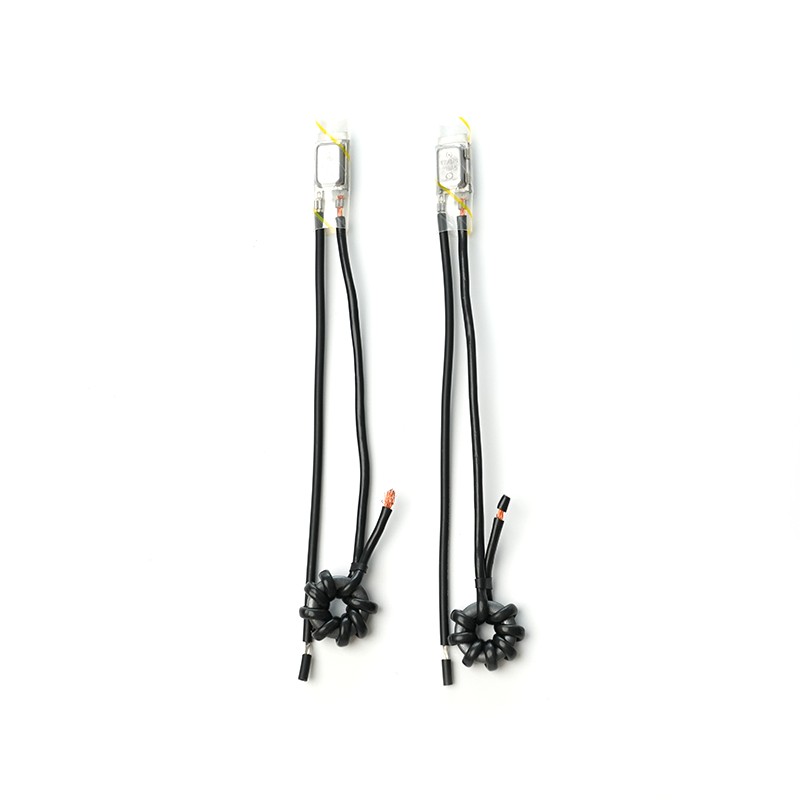
- Lead wire routing: Route lead wires away from hot surfaces and sharp edges. In high-temperature applications, use PTFE-insulated leads rather than PVC, which can soften or crack at sustained temperatures above 80–90°C, creating insulation faults in the winding.
- Avoid mechanical stress on the disc: Do not apply pressure to the center of the bimetal disc during installation — this can pre-stress the disc geometry and alter the calibrated trip temperature. Handle the protector by its housing edges and avoid bending the lead wires close to the housing body.
- Verify polarity-independence: Standard 17AM protectors are polarity-independent for AC applications. For DC circuits, confirm with the manufacturer's datasheet whether polarity restrictions apply to the specific model being used.
Approvals, Certifications, and Compliance
For equipment intended for sale in regulated markets, the thermal protectors used must carry the appropriate safety certifications. The 17AM series from established manufacturers is typically available with certifications including UL recognition (under UL 873 for temperature-indicating and regulating equipment), VDE approval (under DIN EN 60730 for automatic electrical controls), CQC certification for the Chinese market, and TÜV or ENEC marks for broader European market access. These certifications confirm that the component has been independently tested for electrical safety, temperature accuracy, endurance, and dielectric strength to the applicable standard.
When sourcing 17AM protectors for equipment that must carry CE marking, UL listing, or other end-product certifications, it is essential to use components with the specific certification required by your certification body. A component that is VDE-approved is not automatically acceptable as a UL-recognized component, and substituting one for the other can invalidate the equipment's certification. Always confirm the applicable certification on the component's datasheet or test report — not just on a supplier's website or catalog description — and retain copies of certification documents for your technical file.
Troubleshooting: When a 17AM Protector Trips Repeatedly
Repeated tripping of a 17AM thermal protector in service is a symptom that demands investigation rather than simply resetting the equipment and resuming operation. The protector is functioning correctly — it is detecting an overtemperature condition and interrupting the circuit as designed. Continuing to reset and restart without identifying and correcting the root cause will eventually result in insulation failure, bearing damage, or other consequential failures that are far more expensive to repair than the underlying fault.
The most common causes of repeated thermal protector tripping in motor applications include sustained overload — the motor is being asked to drive a load that exceeds its design rating, drawing excessive current and generating heat faster than it can be dissipated. Blocked ventilation is another frequent culprit: dust accumulation on motor cooling fins, a blocked fan guard, or installation in an enclosure without adequate airflow dramatically reduces the motor's ability to reject heat even at rated load. Single-phasing in three-phase motors — where one supply phase is lost due to a blown fuse or a faulty contactor — causes the remaining two phases to carry disproportionately high current, generating localized winding heating that the protector correctly detects.
In transformer and coil applications, repeated tripping often indicates that the duty cycle has increased beyond the original design assumption — either the transformer is being used for longer continuous periods or the load current has increased due to circuit changes. Reviewing the original thermal design assumptions against current operating conditions is the correct first step, followed by either derating the load, improving ventilation, or upgrading to a higher-rated component if the duty requirement has genuinely and permanently increased.



As China Thermal Protectors Manufacturers,Provide customers with high-quality and reliable protectors and electrical product safety protection solutions.
-
Tel:+86-515-88498139
-
Email:[email protected]
-
Phone:+86-13913681876
-
Add: Building C, No. 888 Huanhu West Second Road, Lingang New Area, China (Shanghai) Pilot Free Trade Zone
