

 English

How Does a Bimetal Thermostat Switch Work and How Do You Choose the Right One?

The bimetal thermostat switch is one of the most elegantly simple yet functionally reliable temperature control devices in modern electrical engineering. Without any external power source, electronic control circuit, or programmable logic, it autonomously opens or closes an electrical circuit in direct response to temperature change — a capability derived entirely from the differential thermal expansion of two bonded metal strips. Found in household appliances, industrial equipment, automotive systems, HVAC components, and consumer electronics, the bimetal thermostat switch has endured as a preferred thermal protection and control solution for over a century precisely because its operating principle is inherently reliable, self-contained, and requires no maintenance under normal operating conditions. Understanding how these switches work, how they are specified, and how to select the right variant for a given application is essential knowledge for engineers, product designers, and procurement professionals working with thermally managed systems.
The Operating Principle Behind Bimetal Thermostat Switches
The operating principle of a bimetal thermostat switch is founded on a fundamental property of metals — that different metals expand at different rates when heated, characterized by their respective coefficients of thermal expansion (CTE). A bimetal strip is produced by permanently bonding two layers of dissimilar metals — typically a high-expansion alloy such as brass, copper, or a nickel-iron alloy on one side, and a low-expansion alloy such as Invar (a nickel-iron alloy with an exceptionally low CTE) on the other — through co-rolling, cladding, or sintering. The two layers are metallurgically bonded so that they cannot slide relative to each other.
When the bimetal strip is heated, the high-expansion layer attempts to elongate more than the low-expansion layer. Since the two are rigidly bonded, this differential expansion cannot be accommodated by relative sliding and instead produces a bending stress that causes the entire strip to curve toward the low-expansion side. As temperature rises, this curvature increases progressively until a critical deflection threshold is reached at which the strip — configured as the moving contact carrier in the switch — snaps from one stable position to another in a rapid, decisive switching action. This snap-action behavior, produced in most modern bimetal switches by a pre-dished or pre-stressed disc geometry rather than a simple cantilever strip, is critical to reliable switching performance because it ensures the contacts open and close rapidly rather than slowly, minimizing arcing at the contact surfaces and extending electrical contact life dramatically.

Types of Bimetal Thermostat Switches and Their Configurations
Bimetal thermostat switches are manufactured in several distinct configurations that differ in their switching action, reset mechanism, contact arrangement, and physical form factor. Selecting the correct type is as important as selecting the correct temperature rating.
Normally Closed (NC) vs. Normally Open (NO) Types
The most fundamental classification of bimetal thermostat switches is whether they are normally closed (NC) or normally open (NO) at ambient temperature. Normally closed switches conduct current in their default state and open the circuit when the temperature reaches the trip point — the configuration used in the vast majority of thermal protection applications, where the switch interrupts power to a heater, motor, or other load when an over-temperature condition is detected. Normally open switches, by contrast, remain open at ambient temperature and close when the set temperature is reached, used in applications such as fan activation circuits where the controlled device should switch on in response to elevated temperature rather than switch off.
Auto-Reset vs. Manual-Reset Types
Auto-reset bimetal thermostat switches restore themselves to their original contact position automatically when the temperature falls sufficiently below the trip point — the temperature at which reset occurs being lower than the trip temperature, with the difference between trip and reset temperatures known as the differential or hysteresis. This automatic cycling behavior makes auto-reset switches well-suited for continuous temperature regulation applications such as appliance thermostats and HVAC controls. Manual-reset switches, by contrast, incorporate a mechanical latch that holds the contacts in the tripped position even after the temperature has returned to normal. They can only be reset by deliberate manual operation of a reset button or lever, ensuring that a technician must physically inspect the equipment before it can be restarted. Manual-reset types are specified for critical safety applications — motor overload protection, boiler thermal cutouts, and industrial equipment thermal protection — where automatic restart after an overtemperature event could result in equipment damage or personnel hazard.
Disc-Type vs. Creep-Action Types
Disc-type bimetal switches use a pre-dished circular bimetallic disc that stores mechanical energy in its dished configuration and releases it in a rapid snap-through inversion at the trip temperature — producing the crisp, low-arc switching action preferred for electrical contact applications. Creep-action bimetal switches use a flat or simply curved bimetal strip that deflects gradually and continuously with temperature change, providing proportional actuation force rather than snap switching. Creep-action devices are used as sensing elements in dial thermometers, temperature gauges, and proportional control mechanisms rather than as direct-acting electrical switches, because their gradual movement would cause prolonged contact bouncing and arc erosion if used for direct electrical switching.
Key Specifications and Parameters for Bimetal Thermostat Switches
Correctly specifying a bimetal thermostat switch requires evaluating a set of interdependent electrical and thermal parameters against the requirements of the application. The following table summarizes the key specifications that define the performance and suitability of a bimetal thermostat switch.
| Parameter | Typical Range | Description | Importance |
| Trip Temperature | 40°C – 280°C | Temperature at which contacts switch | Critical |
| Temperature Differential | 5°C – 40°C | Difference between trip and auto-reset temperature | High |
| Rated Current | 0.5A – 20A | Maximum continuous current the contacts can carry | Critical |
| Rated Voltage | 12V – 480V AC/DC | Maximum circuit voltage the switch is rated for | Critical |
| Temperature Accuracy | ±3°C – ±10°C | Tolerance on the nominal trip temperature | Medium–High |
| Mechanical Life | 10,000 – 100,000 cycles | Number of rated switching operations | Medium |
| IP Protection Rating | IP00 – IP67 | Ingress protection against dust and moisture | Application-dependent |
Trip temperature tolerance deserves particular attention during specification. Most catalog bimetal thermostat switches carry a trip temperature tolerance of ±5°C to ±10°C from the nominal value, meaning a switch rated at 85°C may actually trip anywhere between 75°C and 95°C. In applications where the thermal margin between normal operating temperature and the trip point is narrow, this tolerance must be explicitly accounted for in the system thermal design to ensure the switch trips reliably under fault conditions without tripping spuriously during normal operation. Tighter tolerance switches — typically ±3°C or better — are available from specialist manufacturers at a cost premium for applications where precision is required.
Common Applications of Bimetal Thermostat Switches Across Industries
The bimetal thermostat switch's combination of self-contained operation, compact size, wide temperature range, and low cost has led to its adoption across an extraordinarily diverse range of products and systems. Its applications span from milliamp-level signal switching in precision instruments to heavy-duty motor protection in industrial equipment.
Household Appliances and Consumer Electronics
Bimetal thermostat switches are embedded in virtually every electrically heated household appliance. Electric kettles use a bimetal switch mounted in a steam tube to detect the steam generated when water reaches boiling point, triggering automatic shutoff — the mechanism responsible for the characteristic click and power-off sequence that occurs at the end of every boiling cycle. Hair dryers incorporate bimetal thermal cutouts in the heating element assembly to prevent overheating if airflow is blocked. Electric irons use bimetal thermostats to cycle the heating element on and off to maintain a set temperature within an acceptable range. Clothes dryers incorporate multiple bimetal safety cutouts that permanently disconnect power if drum temperatures exceed safe limits due to blocked venting or heating element faults.
Motor and Transformer Thermal Protection
Electric motors and transformers generate heat proportional to their loading level, and overheating is a primary cause of insulation degradation and premature failure in both device types. Bimetal thermostat switches are mounted directly on motor windings or embedded in transformer coils to monitor winding temperature and interrupt power or trigger an alarm when temperature exceeds safe limits. The physical contact between the switch and the heat source ensures that the switch responds to the actual winding temperature rather than to ambient air temperature, providing more accurate and responsive protection than external temperature monitoring. For three-phase motors, a switch is typically embedded in each phase winding, with all three switches wired in series so that overheating in any winding triggers the protective action.
HVAC and Refrigeration Systems
In HVAC systems, bimetal thermostat switches serve multiple control and protection roles. Fan motor thermal cutouts prevent fan motor overheating in air handling units. Defrost termination thermostats in refrigeration systems detect when the evaporator coil has fully defrosted and switch off the defrost heater to prevent the coil from overheating once ice has been cleared. Compressor thermal protectors embedded in hermetic compressor motor windings provide internal overload protection independent of the external electrical control system. In electric baseboard heaters, bimetal thermostats regulate room temperature by cycling the heater element, providing simple and cost-effective temperature control without requiring a separate wall thermostat in single-zone installations.
Automotive and Industrial Equipment
Automotive applications for bimetal thermostat switches include cooling fan activation switches that turn the electric radiator cooling fan on when coolant temperature exceeds a set threshold, and thermal circuit breakers in automotive electrical systems that reset automatically after an overload event. In industrial settings, bimetal switches protect conveyor belt motors, pump motors, compressors, and heating elements from overtemperature damage. Industrial bimetal switches used in these applications are often designed to higher current and voltage ratings, wider operating temperature ranges, and more stringent sealing requirements than their consumer appliance counterparts, reflecting the more demanding duty cycles and environmental conditions of industrial installations.
Bimetal vs. Electronic Temperature Switches: Choosing the Right Technology
The widespread availability of low-cost electronic temperature sensors and microcontroller-based control systems has raised the question of whether bimetal thermostat switches remain the best choice for temperature switching applications or whether electronic alternatives should be preferred. The answer depends on the specific requirements of the application, as both technologies have distinct and complementary strengths.
- Advantages of bimetal switches: No external power supply required for operation — the switch functions even when the main control system has failed, making it genuinely fail-safe in thermal protection applications. Zero standby power consumption. Extremely high reliability for simple on/off switching functions with no firmware, no software failure modes, and no susceptibility to electromagnetic interference or power supply transients. Low unit cost in volume production. Long proven service life in stable temperature applications.
- Limitations of bimetal switches: Fixed trip temperature that cannot be adjusted in the field without replacing the switch (in most designs). Relatively wide trip temperature tolerance compared to calibrated electronic sensors. Limited accuracy for proportional temperature control. Mechanical fatigue over large numbers of switching cycles in high-frequency applications. Response speed dependent on thermal mass and mounting method rather than adjustable through software.
- When electronic temperature switches are preferable: Applications requiring field-adjustable setpoints, multiple setpoints, or precise temperature tolerances below ±2°C. Systems where temperature data logging, remote monitoring, or integration with a supervisory control system is required. Applications involving very rapid temperature changes where the thermal mass of a bimetal switch would result in unacceptable response delay.
- Hybrid approaches in practice: Many well-engineered products use both technologies in complementary roles — an electronic temperature controller for normal regulation and a bimetal thermal cutout as an independent, hardwired backup safety device that operates regardless of the state of the control electronics. This layered approach provides the flexibility of electronic control with the fail-safe reliability of the bimetal device.
How to Select the Right Bimetal Thermostat Switch for Your Application
Selecting a bimetal thermostat switch that will perform reliably throughout its intended service life requires a structured evaluation of the application's thermal, electrical, mechanical, and environmental requirements. Working through the following considerations systematically will identify the correct switch specification and avoid the premature failures and safety incidents that result from incorrect selection.
- Define the trip temperature with adequate thermal margin: The nominal trip temperature should be set high enough above the maximum normal operating temperature to prevent nuisance tripping, but low enough below the maximum safe operating temperature to provide meaningful protection. A minimum margin of 10–15°C between normal peak operating temperature and the switch's minimum trip temperature (accounting for tolerance) is a generally accepted rule of thumb.
- Verify electrical ratings against actual circuit conditions: The rated current and voltage must exceed the actual circuit values, including inrush current at startup for motor and transformer applications. Motor startup inrush current — which may be 5–8 times the rated running current — must be evaluated against the switch's inrush current capability, not just its steady-state current rating.
- Select NC or NO based on fail-safe requirements: Consider what happens to the controlled load if the switch fails in its current position. In most thermal protection applications, a normally closed switch that fails open (a "fail-open" mode) de-energizes the load, which is the safer failure mode. Verify that the switch type selected produces a safe system state under its most probable failure modes.
- Choose auto-reset or manual-reset based on safety requirements: Manual-reset switches should be specified wherever automatic restart after a thermal event could cause injury, further equipment damage, or fire. Auto-reset switches are appropriate for temperature regulation applications where cycling is expected and the thermal event is self-limiting.
- Consider mounting and thermal coupling: The switch must be mounted in intimate thermal contact with the surface or medium whose temperature it is monitoring. Poor thermal coupling — caused by air gaps, inadequate clamping force, or mounting on a thermally isolated surface — results in the switch responding to a temperature lower than the actual temperature of the protected component, potentially allowing dangerous overheating before the switch trips. Thermal compound or spring-loaded mounting clips improve thermal coupling in demanding applications.
- Confirm environmental suitability: Verify that the switch body material, terminal material, and sealing level are appropriate for the operating environment. Switches used in humid, chemically aggressive, or outdoor environments require appropriate IP ratings and corrosion-resistant materials. High-vibration environments require switches with robust mechanical construction and secure mounting provisions to prevent fatigue failure of terminals or switch body mounting tabs.
Installation, Testing, and Maintenance Best Practices
Even a correctly specified bimetal thermostat switch will underperform or fail prematurely if installed incorrectly or not verified during commissioning. Establishing consistent installation and verification practices protects both equipment and personnel throughout the product's service life.
During installation, ensure that the switch body is in full contact with the monitored surface and secured with sufficient clamping force to maintain contact under vibration and thermal cycling. Avoid applying excessive torque to mounting screws on disc-type switches, as over-tightening can distort the switch housing and alter the trip temperature by pre-stressing the bimetal disc. Wiring connections should be made with appropriately rated terminals and conductors that comply with the current rating of the switch, and cable routing should prevent mechanical stress on switch terminals from cable weight or thermal movement of adjacent components. After installation, functional verification — heating the protected component to a temperature approaching the trip point and confirming that the switch operates within its specified tolerance — provides confidence that thermal coupling and switch calibration are both correct before the equipment enters service. Annual inspection of switch terminals for corrosion and secure connection, combined with verification that the switch body remains in firm contact with its mounting surface, constitutes adequate maintenance for most applications under normal service conditions.
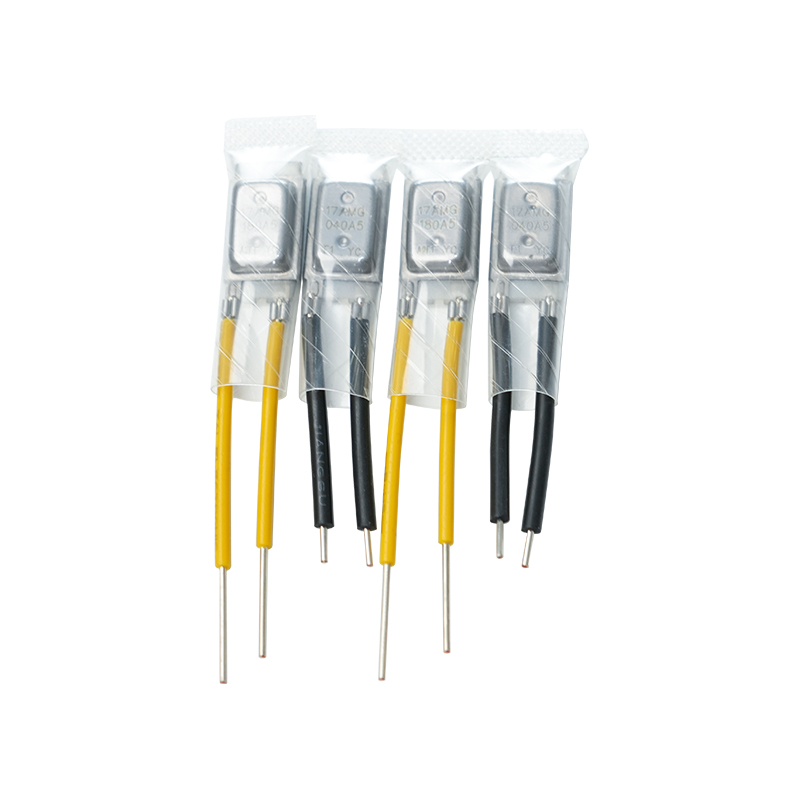
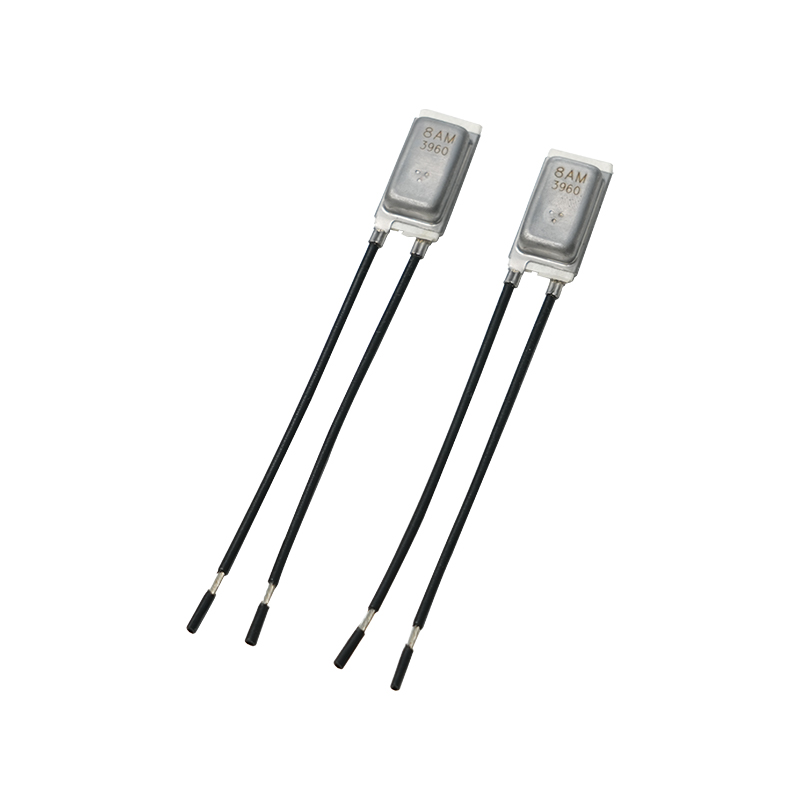
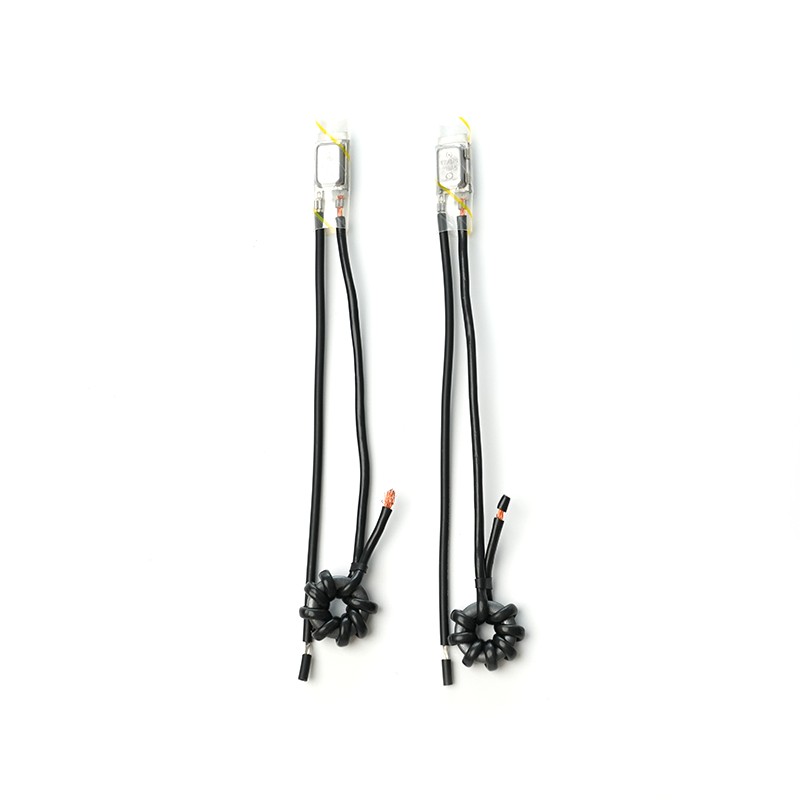
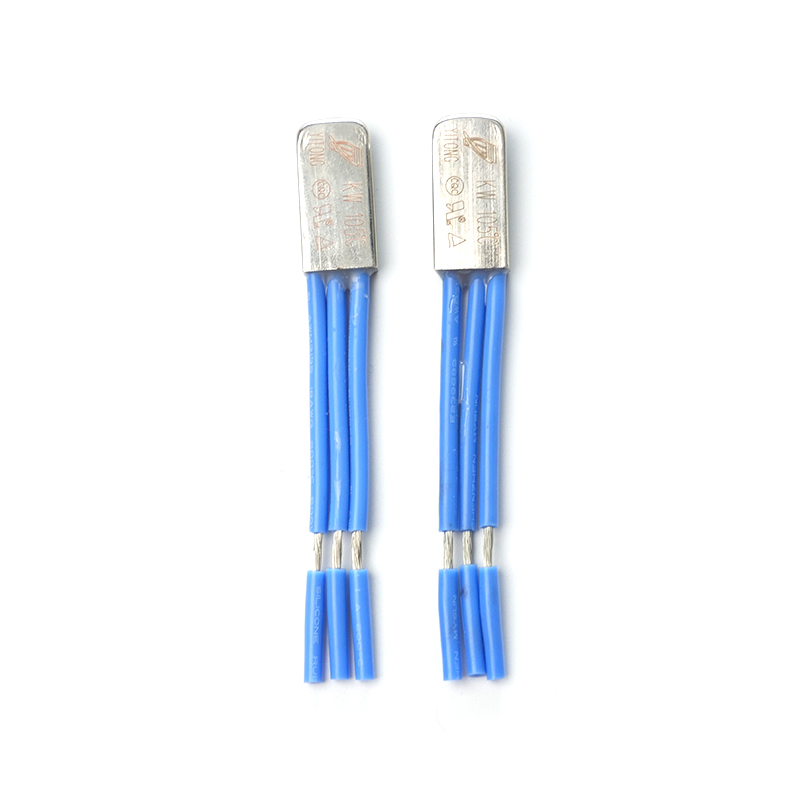



As China Thermal Protectors Manufacturers,Provide customers with high-quality and reliable protectors and electrical product safety protection solutions.
-
Tel:+86-515-88498139
-
Email:[email protected]
-
Phone:+86-13913681876
-
Add: Building C, No. 888 Huanhu West Second Road, Lingang New Area, China (Shanghai) Pilot Free Trade Zone
